Friday, November 7, 2008

2008 post-election defamation report.

2008 post-election defamation report.


There are a few reasons why political candidates rarely sue over over-the top accusations amidst the fiery rhetoric often brought up in campaigns. For one thing, it is exceedingly hard for a "public figure" to win such a claim, because the First Amendment creates a higher standard for assertions that touch upon matters of public interest. For another, it usually doesn't play well politically. However, perhaps the modern rarity of politicians suing other politicians over alleged slanders is exactly the thing that might make this politically feasible. The filing of the lawsuit, in essence, declares this to be beyond the bounds of decent politics. And if the plaintiff wins and receives a judgment, it may well result in a reduction of extremism in negative political advertising.


Sinclair's video

Plenty of flatly absurd allegations were spread around the blogosphere during the presidential election. However, by far the best example of a claim for which no First Amendment protection would apply against a potential defamation suit is that made by a person named Larry Sinclair, who claimed that he did cocaine and engaged in a gay sex act with Senator Obama:


If Mr. Sinclair can not prove the truth of this allegation, then a court could find this to be a knowingly false statement, and one unquestionably designed to damage Senator Obama's reputation and bring public disdain upon him. Of course, Senator Obama has no reason to bring attention to this sort of thing, and certainly he has more important things to do than press a lawsuit (or fifty, since Mr. Sinclair could be sued separately in every state where his assertion was broadcast). But if I were the subject of this sort of allegations, I would not hesitate to file a defamation suit.


Elizabeth Dole's "Godless" advertisement.

Here is an actual case of a politician suing another for defamation in a high profile Senate race.

In the North Carolina Senate race, challenger Kay Hagan filed a lawsuit against the campaign of Senator Elizabeth Dole over an ad which Hagan - a Sunday school teacher and Presbyterian church elder - characterized as "an attack on my Christian faith."

The 30-second spot at the heart of the suit claimed that Hagan was the subject of a "secret fundraiser" by one "Godless Americans Political Action Committee." According to CNN:

The ad then shows members of the group, which promotes rights for atheists and the separation of church and state, declaring that neither God nor Jesus exists.
"Godless Americans and Kay Hagan," the ad continues. "She hid from cameras. Took 'Godless' money. What did Kay Hagan promise in return?"
The ad ends with a picture of Hagan and a voice that sounds like hers declaring, "There is no God."


The heart of the claim, from my view, is not really whether Hagan attended a secret meeting, but whether the ad would lead a reasonable viewer to believe that it was Hagan quoted as saying "There is no God." A few weeks ago I blogged about a woman in Florida who sued Jews for Jesus for intimating that she had converted into their beliefs, and noted that the Florida Supreme Court had found the disrepute she might suffer among her own minority group to be enough to sustain a claim.

I will not venture to say whether accusing someone of atheism might generally be thought of as something that brings the speaker into ill repute - but there is no question that there is at least a substantial portion of the population who would think that the voice in the ad was Hagan, and for whom it would bring that negative response.

Al Franken's "Fishing Buddies" ad

In Minnesota, the incumbent Norm Coleman has filed a defamation suit against challenger Al Franken over an ad which "claimed Coleman was a stooge of oil interests":


This one presents a much harder case to prove than the Dole case. If Franken can show that Coleman did in fact receive money from the people or entities discussed in the ad, the remaining accusations become a matter of opinion.

California Mormons attacking a gay couple

Finally, there is the controversial anti-Proposition 8 ad in California showing a pair of Mormons stripping rights from a gay couple:


Although this has raised controversy and condemnation from some quarters, I have blogged before on the absence of a "group defamation" claim in the United States. Since Mormons are a fairly large group, no individual Mormon would have standing to assert that the ad was about them in particular, which is probably why no defamation suit has resulted from this ad.

Thursday, October 30, 2008

No False Light in Florida!

With Halloween upon us, the Florida Supreme Court has ruled just this past week that there is no such thing as a "false light" action in Florida. "False light" is a close cousin on defamation said to arise from the right to privacy - the elements are usually set forth as (1) the public use of a person's name or image (2) in a context that creates a false impression of that person, (3) such impression being one which would be offensive to the reasonable person, and (4) this was done with intent or at least with reckless disregard for the truth, and for the rights of the aggreived party.

The case in which the Florida Supreme Court took this question up was Rapp v. Jews for Jesus, Inc., and the claim was that the defendant religious organization had put out a newsletter which falsely characterized plaintiff, a Jewish woman, of having "joined Jews for Jesus, and/or [become] a believer in the tenets, the actions, and the philosophy of Jews for Jesus." The newsletter had told a stepson's story of how Rapp had "began to ask me questions about Jesus," and after a good talking-to on the subject:

...began to cry, and when I asked her if she would like to ask G-d for forgiveness for her sins and receive Y’Shua she said yes! My stepmother repeated the sinner’s prayer with me-praise G-d!


Whether this describes an adoption of or conversion to another faith, well that would have been a question for the jury. However, the trial dismissed Rapp's defamation claim (because "the 'common mind' reading the newsletter would not have found Edith to be an object of 'hatred, distrust, ridicule, contempt or disgrace'") and sent the false light claim up to the Fourth Circuit Court of Appeals to review (from which it was sent right on up to the state Supremes).

The Florida Supreme Court then found that there was too much overlap between the false light cause of action and the pre-existing defamation cause of action for both actions to be required. Although false light has often been posited as being available as a means to counter "literally true statements that create a false impression," the Court noted that defamation will allow recovery in those circumstances as well. The Court also found that a false light cause of action runs into First Amendment problems that have been long settled with respect to defamation claims.

However, the ruling was not all bad news for Rapp. With false light off the table, the Court found that her other claim, the defamation claim, had been improperly dismissed. Even though an alleged conversion to another religion would not have held her up to contempt to society at large, the trial court should have considered whether Rapp's reputation was injured with a "substantial and respectable minority of the community." So this case gets sent back down to the intermediate appellate court, with an invitation to determine whether Rapp's initial complaint supports a finding that she was defamed in the eyes of a respectable minority of the community.

Even if she loses, Rapp has had an additional measure of revenge through the lawsuit, however. Her Complaint contained a number of assertions which, although stricken by the court, were mentioned (albeit in a footnote) in the Supreme Court's decision. She complained, for example that:

Jews for Jesus attempts to convince Jews that they can accept concepts which are alien and contrary to Jewish beliefs yet remain Jewish in order to fraudulently induce them to join their movement.


And that:

A further motive for fabrication was to help advance the erroneous concept that many Jews have adopted the beliefs of Jews for Jesus. In order to promote its false teachings, Jews for Jesus attempts to inflate the number of its converts."

Whether or not Rapp's own claims about Jews for Jesus are true, she is doubly immunized from any liability for making them, first because neither defamation nor any related tort recognizes a cause of action for defamation of an entire group (rather than names individuals) and secondly because the allegations were made in a format - the complaint filed in a legal proceeding - in which the claimant can make just about any statement with impunity.

My final word on this is that the Florida Supreme Court made a great deal of sense. False light has always been a sort of odd lesser form of defamation claim, but defamation is itself a flexible enough doctrine to capture all kinds of falsehoods, even those dressed innocuously. Some attorneys may grumble at having a sword permanently sheathed from the arsenal of causes of action, but they would be better admonished to polish and weild wisely the powerful weapons that remain.

Tuesday, October 14, 2008

Unfair credit report? Fair game for defamation!

Here's a decision that is timely enough to warm some hearts: Roybal v. Equifax, 2008 U.S. Dist. LEXIS 79789 (E.D. Cal. 2008)


In this case, the Plaintiffs were husband and wife Daniel and Vida Roybal. They sought to refinance their mortgage, only to learn that "approximately 100 inaccurate, derogatory entries were being reported on Mr. Roybal's credit report by Rickenbacker Industries ("Rickenbacker"), a collection agency." The couple went through a variety of steps, documented in the opinion of the court, to have these false entries removed from their credit history - but the inaccuracies kept showing up, until the couple finally had to hire a lawyer to get their credit history cleared.


Mr. and Mrs. Roybal didn't take things lying down. They sued, for a number of counts including (well, look what blog you're reading, after all) defamation. Now, in complete candor, the motion that this decision addresses is just a motion for summary judgment. That is, the defendants asked the court to throw the case out before it even got to a jury, claiming that even if everything the plaintiffs are saying is true, those facts do not support the claims for relief. The court will deny a motion for summary judgment if there is a "genuine issue of material fact" - that is, if the facts might indeed support the claims, and there is some dispute about what the facts are.


The Roybal's main claim was not defamation, but defendants' alleged violation of the "Fair Credit Reporting Act," a federal statute which requires the folks who provide credit histories to do so accurately, and to double-check if inaccuracies are brought to their attention. The Roybal's other claims were state law causes of action, including a number of negligence-based theories, as well as defamation, invasion of privacy, and false light.

The defendants argued pre-emption - that the plaintiffs could not bring those state law causes of action because the federal law prohibited negligence and defamation actions over incorrect information provided to the consumer - but the court disagreed, because here the incorrect information was provided to the bank that the consumers were trying to get a loan from.
The court also found that no privilege was invoked simply because the Roybals, in seeking a loan, had authorized the bank to get the credit report. In order to escape this privilege, the Roybals had to show malice, and this they could do:

Defendants do not dispute that inaccuracies appeared on Mr. Roybal's credit report during 2004, nor do they dispute that copies of Mr. Roybal's credit report were provided to lenders in 2004. Defendants instead argue that they are entitled to protection... because Plaintiffs have not shown that Defendants acted with "malice."

However, since Plaintiffs claim to have provided notice of the inaccuracies in Mr. Roybal's credit file to Defendants on multiple occasions beginning in 2004, Plaintiffs have sufficiently shown, for purposes of the current Motions, that Defendants had knowledge of the falsity of the information contained in Mr. Roybal's credit report.


The Court gives little specific discussion to the defamation claim, because little is needed: "Defendants argue that Plaintiffs' Defamation cause of action must fail because Plaintiffs cannot produce any evidence of "malice"... The Court addressed this argument in detail above." End of discussion. The false light claim is similarly treated, along with the comment that there's no reason plaintiff's can not bring both a defamation and a false light claim.

As a practical matter, the Court denying summary judgment means that these questions will go before a jury, and under the current economic situation a jury is not likely to be kindly disposed to a credit agency that reports false information, thus harming a couple's ability to get credit. In these trying times, things are bad enough without having negative falsehoods piled into credit reports, and it is good to know that a Court is letting folks who have suffered such an indignation have a shot at convincing a jury that a remedy is due.

However, as I said, a jury is not likely to be too friendly to the credit agency, and there's no point in these defendants - wealthy companies though they may be - to pay a lot of attorney's fees on the way to losing a big verdict. I would expect to see a settlement in this case favorable to Mr. and Mrs. Roybal, before a juror is ever seated.

Monday, October 6, 2008

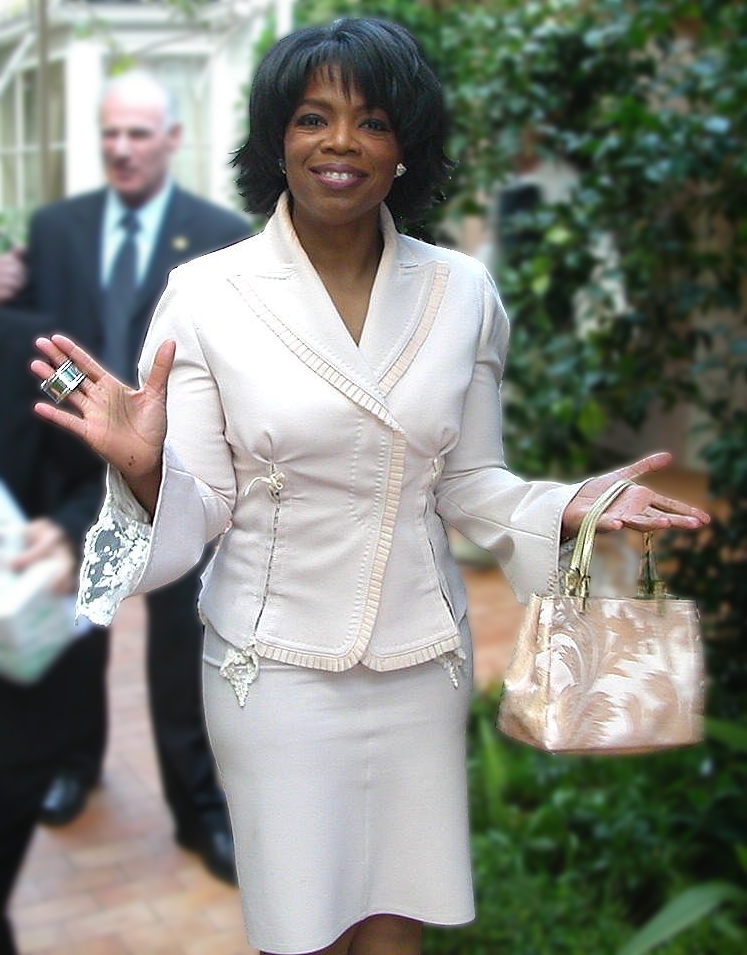
Oprah defamation suit, arising in Africa, filed in Philadelphia


Oprah Winfrey is the subject of a defamation lawsuit filed in a Philadelphia court - the alleged defamation being that "Winfrey suggested that [plaintiff] Nomvuyo Mzamane, 39, of Philadelphia, knew about alleged abuse by a dorm matron [in a Winfrey-sponsored South Africa girls' school] and tried to cover it up." Mzamane, ex-headmistress of the school, claims that she can't get work in the field because of Oprah's allegations, but the litigation strategy may be risky. Is Mzamane an involuntary public figure, or perhaps a limited-purpose public figure in her role as (former) headmistress of a school sponsored by one of the world's most famous people?
It is likely that a court will find that there is at least a compelling public interest in the behavior of a school official with respect to the alleged abuse of students by a person under the official's control. Although Mzamane may not have intently thrust herself into the controversy, she may well be regarded as a public figure for purposes of discussing this controversy, in which case she would have to demonstrate actual malice on Oprah's part to carry a suit forward. And actual malice will be hard to prove given that Mzamane herself, in a previous interview, had suggested that Oprah "may have been guided with bad information" and described Oprah as possibly having been "ill-advised." Absent a specific statement by Oprah specifying wrongdoing on Mzamane's part, and evidence that Oprah knew the truth to be otherwise, this lawsuit likely does not survive a motion for summary judgment.

Interestingly enough, this is not the first time the talk show diva has been sued for defamation. In 1998, Texas cattle ranchers sued--and lost--over a show in which Oprah discussed mad cow disease, and the practice of cattle being fed "protein supplements produced from the wastes of slaughtered cattle" (ewww!) resulting in "Winfrey's disgusted vow that she would never eat another hamburger." The plaintiff's claimed that even though Oprah "never touched specifically on Texas cattle or named the plaintiffs," she seriously harmed their market, causing prices to plummet. Now that's market power.

Oprah moved her show to Texas for the duration of that trial. So, will she be setting up in Philly for this one? Time will tell, but this case just might be a bigger boon to Oprah's ratings than a hit to Oprah's pocketbook.

Here comes the pun: stay tuned!


Unless otherwise indicated, all images on this blog are from the Wikimedia Commons.

Tuesday, August 12, 2008

Anthrax - a suspect case

Just a few weeks ago, in Hatfill v. N.Y. Times Co., 2008 U.S. App. LEXIS 14901 (4th Cir. 2008), the Fourth Circuit affirmed the dismissal of a long-litigated defamation case brought against the New York Times by Dr. Steven J. Hatfill, a biodefense research scientist that a Times reporter had suggested as a possible suspect in the 2001 anthrax mailings to the U.S. Congress and various news organizations. There is some irony that this opinion was handed down two weeks before the suicide of Dr. Bruce Edward Ivens, also a biodefense researcher, who the FBI has since identified as the lone party responsible for the mailings.

The court summarized the alleged defamation as follows:

In a series of five columns appearing in The New York Times from May 2002 to August 2002... Kristof used information provided by experts and other sources to profile a suspect in the attacks, ultimately focusing on Dr. Steven J. Hatfill, a biodefense research scientist. With each publication, Kristof identified new evidence suggesting Dr. Hatfill as a prime suspect. The columns noted that Dr. Hatfill had access to anthrax, had knowledge of how to make it, and had a motive. In the same columns, Kristof criticized the FBI for not investigating the facts against Dr. Hatfill. He characterized its investigation as "lackadaisical" and "unbelievably lethargic" and admonished that the FBI's investigatory attitude "continues to threaten America's national security." By August 13, 2002, however, when Kristof wrote his last column on this issue, he observed that the FBI had appreciably intensified its investigation, leading Kristof to conclude, "there is reason to hope that the bureau may soon be able to end this unseemly limbo by either exculpating Dr. Hatfill or arresting him."


The question that the appellate court focused on in determining whether the case was properly dismissed was whether Hatfill was a "public figure," which would give the newspaper additional protection under the First Amendment. If Hatfill was such a figure, he would be required to show "actual malice" on the part of the newspaper to recover for false claims. In this case, Hatfill was not an elected official or a person of particular celbrity or notoriety prior to the attacks, but the Court noted that Hatfill could still be considered a "limited purpose public figure" if he had taken steps to thrust himself to the forefront of the public controversy at issue in the defamation case. The Court found that the public controversy at issue went beyond the particular attacks in 2001, and related to bioterror attacks in general - a topic for which Hatfill had promoted himself as an expert through lectures and and in newspaper interviews before and the attacks, and in additional media appearances after the attacks but before the New York Times columns ran.

Once Hatfill was found to be a limited purpose public figure, the Court easily found that there was no "actual malice," which would have required the New York Times reporter to have actual knowledge that the claims were false. To the contrary, the Court found:

[T]he record contains substantial evidence to support The New York Times' contention that Kristof actually believed that Dr. Hatfill was the prime suspect. At the time that Kristof wrote his columns, he knew from several sources that Dr. Hatfill fit the profile that the FBI had developed and that he had been identified specifically by the FBI as a suspect who should be investigated carefully. In conducting research for his columns, Kristof had reviewed many previously published articles about Dr. Hatfill, which recounted that he had been questioned by the FBI more than once; that he had voluntarily vaccinated himself against anthrax shortly before the mailings; that he had access to labs where anthrax was stored; that he had knowledge about anthrax's use as a weapon; that he had strong views about the bioterrorism threat; that he had agreed that his "background naturally drew the FBI's attention"; that he had spoken frequently about possible bioterrorism; and that he lost his security clearance after he failed a polygraph test shortly before the mailings. In addition, Kristof reviewed numerous documents, including Dr. Hatfill's resume and various reports, papers, and letters written by him describing his knowledge of bioterrorism and biological weapons.


The protections that the First Amendment extends to defamation defendants are broad, and have been criticized for their breadth. There can be little doubt that Hatfill was injured by accusatory writings directed against him, and it is likely that the litigation was a great expense. Perhaps a countervailing concern that the courts should consider is the need for private citizens who happen to develop expertise in areas where controversy might arise to be restored to some level of public footing when a controversy does indeed arise. After all, every biodefense researcher is a potential suspect in a biological attack, and it would therefore be good policy to avoid discouraging people from entering this useful field by assuring them that incorrect suspicions against them would be recompensed to some degree.

Tuesday, August 5, 2008

Election year trademark politics

I am again straying away from defamation matters to note that within the past week and a half, the United States Patent and Trademark Office has rejected applications for trademark registration incorporating part or all of the names of two of our current leading presidential candidates. BARAK? OH BUMMER! (Application #77420522) was rejected on July 28, 2008, while MORE OF THE SAME JOHN MCCAIN (Application #77437466) was rejected on August 1, 2008. In both instances the rejection was "refused under Section 2(c) of the Trademark Act, for the record does not include the written consent" of the person named.

The McCain mark was also rejected on the basis of "likelihood of confusion with the mark in U.S. Registration No. 3333658" - which happens to be the familiar "McCain" logo under a star which Senator John McCain has been using throughout this campaign (and for which McCain's "consent is of record").

Of interesting note, the application for BARAK? OH BUMMER! was filed on March 12, 2008, the application for MORE OF THE SAME JOHN MCCAIN was filed a few weeks later, on April 2, 2008, and by a completely unrelated party. Both rejections were authored by USPTO examiner Karen Bush, who has authored a number of other rejections for marks containing McCain and/or Obama, leading me to suspect that Ms. Bush has been designated as the go-to person for handling these election year issues.

As I said, this is not a defamation matter. The purpose of the restriction on unconsenting use of a person's name is not to prevent the registration of marks which defame that person (although there is a separate restriction under Section 2(a) for "matter which may disparage or falsely suggest a connection with persons, living or dead"). Rather, it is to prevent sellers from taking advantage of the reputation of the referenced indivual. Although this policy is not spelled out in the statute, surely no one would mistake the above marks as efforts to fool the public into thinking that products bearing them were made by or endorsed by the named individuals.

An interesting sidenote on the nature of trademarks is that John McCain's ownership of the "McCain" mark not only prevents uses such as the above, but would also prevent a person whose name was in fact McCain from obtaining a trademark registration in their own name in support of their own candidacy for public office. "McCain" is not a terribly uncommon surname, and in fact there are several Canadian politicians who share that name. Indeed, John McCain could conceivable sue such a person to prevent them from selling campaign materials under their own name!

Friday, August 1, 2008

Did John McCain invade Paris Hilton's rights?

While not quite a "defamation" issue, John McCain's campaign recently made news by using - and according to some, abusing - the image of Paris Hilton, purportedly as a means of painting rival candidate Barack Obama as "the biggest celebrity in the world." However, Hilton has the legal right to control the use of her image, especially when it is being used to market a product. And, as it turns out, the McCain camp did not check with Hilton before using her image to market their product. This has not passed unnoticed by Hilton, who "blasted the McCain camp for using her image without asking for permission," and whose representatives reported that "Miss Hilton was not asked, nor did she give permission for the use of her likeness in the ad."

In short, the ad may constitute a violation of the privacy or right of publicity laws of quite a few states (a quirk of the area of law is that the term "privacy" is often used to denote "publicity" rights). This opens the door for Hilton to potentially recover a financial penalty from the McCain Campaign. However controversial the basis of her publicity may be, there can be no doubt that, with the price Paris Hilton is typically paid for the use of her image, it is well-recognized as a valuable commodity.

The likely counter-argument is that McCain's use of Hilton's image was protected "political speech," for which a higher degree of leeway is generally permitted than for pure commercial speech. However, even the political speech doctrine is not without limits. If McCain's campaign staff decided to make a commercial showing bouncing basketballs in order to decry Obama's athleticism, they could not walk out of a sporting goods store with armloads of basketballs and refuse to pay for them because they were to be used as part of a political message. Nor could campaign workers use film on a privately-owned basketball court without first obtaining the permission of the owner (and likely paying the going rate to rent the space) - even if they left the edifice exactly as they found it. So it is with the image of Paris Hilton, an article of commerce of determinable value which could have been ascertained prior to its use, and for which permission should have been asked.

Were I advising McCain's campaign, I would tell them to immediately pull that ad (or at the very least remove the imagery of Paris Hilton, and of Britney Spears if it too is unauthorized). Even campaign donors unrelated to the victim are unlikely to be pleased with the prospect of some portion of their donations landing in Hilton's pockets, by a settlement or a judgment.


All images used in this blog are from the Wikimedia Commons.