Showing posts with label libel. Show all posts

Friday, December 5, 2008

'Tis the season for musicians to sue and be sued

Three music-related lawsuits have sprung up in the past few weeks and caught my attention (although, sadly, one is not defamation-related).

Satriani v. Coldplay

The non-defamatory claim is by guitar hero Joe Satriani who has sued British rockers Coldplay on a claim that they plagiarized one of his songs. Decide for yourself:


But plagiarism, where's the fun in that?

Dixie Chick v. some dude

Here, on the other hand, is a straight-up defamation case:

Dixie Chicks singer Natalie Maines is the target of a defamation lawsuit by the stepfather of one of three 8-year-old boys slain in 1993.

Maines spoke out for three people convicted of the slayings and alleged the stepfather was instead involved in the killings.

...

Maines attended a Dec. 19 rally in Little Rock, where she claimed Jason Baldwin, Damien Echols and Jessie Misskelley — known to sympathizers as the "West Memphis Three" — were innocent and that supposed new evidence pointed to Hobbs. Her comments echoed a Nov. 26, 2007, letter that was still on the Dixie Chicks' Web site on Thursday, in which she claimed that new DNA testing of hair from the crime scene linked Hobbs to the killings and that his behavior after the slayings indicated his guilt.


Accusing someone of being involved in the murder of children is pretty straight-up defamatory, so this case will rest on whether that is in fact what Maines said (or whether she was merely expressing her opinion that the subject of her claims had "acted guilty"). A more interesting aspect is the possibility that Maines could raise truth as a defense, and could therefore take upon herself the burden of proving (by preponderance of the evidence) that the plaintiff is indeed responsible for the acts to which her comments were addressed.

Guns & Roses v. Dr. Pepper

My favorite case of the bunch, the facts are preposterous. Hard rockers Guns n' Roses (which, for any true fan of the early stuff, has not been Guns n' Roses since Slash left, but merely Axl Rose with a backing band) had been promising a new album for well over a decade. Soft drink company Dr. Pepper, apparently doubtful of that outcome, promised a free can of their soda to everyone in America if the album were to actually come out in 2008. And behold, on November 23, 2008, Guns n' Roses indeed came out with Chinese Democracy. And Dr Pepper reportedly botched the job of making good on its promise, claiming to fulfill it by making coupons available on its website for a single day, and then not having the capacity to even keep the website up.

Okay, you may have figured out that this is not a defamation case either, but at least one plank of the claims put forth by Guns n' Roses in a threatened lawsuit, for Guns n' Roses lawyer says:

"When you go on the blogs and you read the responses from the fans, they associated Axl with this promotion ... and blame him for the fact that they didn't get their free soda."


In other words, the band believes that Dr Pepper created a false impression of an association between the entities, such that the failure of the promise to be properly carried out would be falsely viewed by the public as a failure on the part of the rockers, and not the soda stockers.

In my opinion, a lawsuit by Guns n' Roses will have slim legs. Dr Pepper may have reneged on its promise to some degree, but this is a PR problem, not a legal one (the promise was made without any consideration and therefore unenforceable). The use of the name of Guns n' Roses might be excused as a fair public comment (it was, after all, really an expression of a lack of faith in the band's ability to come through). But perhaps Dr Pepper could defend themselves by pointing out that the album was not put out by the "real" Guns n' Roses at all, but by Axl Rose with a backing band.

Friday, November 21, 2008

Murtha's defamation defense

Democratic Congressman and decorated Vietnam vet John Murtha is defending a defamation action brought against him by one Staff Sgt. Frank Wuterich, based on Murtha's assertion that Marines in Iraq engaged in "cold-blooded murder and war crimes" with respect to certain civilian deaths in Haditha.

Specifically, Murtha is resisting an order to give a deposition in the case, against which Murtha is asserting immunity to suit "because he was acting in his official role as a lawmaker when he made the comments to reporters." This is something that is, obviously, rarely going to come up in a defamation action. One precedent is in former Senator William Proxmire's failed defense against a 1979 suit brought by a professor in response to Proxmire "awarding" the professer a "Golden Fleece" award, predicated on the professor's supposedly useless government-funded research. Proxmire tried to shield himself with a provision in the Constitution called the "Speech and Debate clause," which says that members of Congress:

...shall in all Cases, except Treason, Felony, and Breach of the Peace, be privileged from Arrest during their attendance at the Session of their Respective Houses, and in going to and from the same, and for any Speech or Debate in either House, they shall not be questioned in any other Place.


In other words, no Congressman can be held liable for what they say in Congress. The Supreme Court held in that case, Hutchinson v. Proxmire, 443 U.S. 111 (1979), that the clause does not cover press releases or interviews outside of Congress, so Murtha may be out of luck there.

Still, one thing the Proxmire case doesn't tell us is what happened after the Supreme Court sent it back to the lower courts for adjudication. I suspect Proxmire's Supreme Court win turned out to be the pinnacle of his success in that litigation. In Murtha's case, if the privilege does apply, the plaintiff must still demonstrate that Murtha's comments could be seen as reflecting on him individually - and Murtha will have to decide whether to take the political risk of asserting truth as a defense.

Friday, November 7, 2008

2008 post-election defamation report.

2008 post-election defamation report.


There are a few reasons why political candidates rarely sue over over-the top accusations amidst the fiery rhetoric often brought up in campaigns. For one thing, it is exceedingly hard for a "public figure" to win such a claim, because the First Amendment creates a higher standard for assertions that touch upon matters of public interest. For another, it usually doesn't play well politically. However, perhaps the modern rarity of politicians suing other politicians over alleged slanders is exactly the thing that might make this politically feasible. The filing of the lawsuit, in essence, declares this to be beyond the bounds of decent politics. And if the plaintiff wins and receives a judgment, it may well result in a reduction of extremism in negative political advertising.


Sinclair's video

Plenty of flatly absurd allegations were spread around the blogosphere during the presidential election. However, by far the best example of a claim for which no First Amendment protection would apply against a potential defamation suit is that made by a person named Larry Sinclair, who claimed that he did cocaine and engaged in a gay sex act with Senator Obama:


If Mr. Sinclair can not prove the truth of this allegation, then a court could find this to be a knowingly false statement, and one unquestionably designed to damage Senator Obama's reputation and bring public disdain upon him. Of course, Senator Obama has no reason to bring attention to this sort of thing, and certainly he has more important things to do than press a lawsuit (or fifty, since Mr. Sinclair could be sued separately in every state where his assertion was broadcast). But if I were the subject of this sort of allegations, I would not hesitate to file a defamation suit.


Elizabeth Dole's "Godless" advertisement.

Here is an actual case of a politician suing another for defamation in a high profile Senate race.

In the North Carolina Senate race, challenger Kay Hagan filed a lawsuit against the campaign of Senator Elizabeth Dole over an ad which Hagan - a Sunday school teacher and Presbyterian church elder - characterized as "an attack on my Christian faith."

The 30-second spot at the heart of the suit claimed that Hagan was the subject of a "secret fundraiser" by one "Godless Americans Political Action Committee." According to CNN:

The ad then shows members of the group, which promotes rights for atheists and the separation of church and state, declaring that neither God nor Jesus exists.
"Godless Americans and Kay Hagan," the ad continues. "She hid from cameras. Took 'Godless' money. What did Kay Hagan promise in return?"
The ad ends with a picture of Hagan and a voice that sounds like hers declaring, "There is no God."


The heart of the claim, from my view, is not really whether Hagan attended a secret meeting, but whether the ad would lead a reasonable viewer to believe that it was Hagan quoted as saying "There is no God." A few weeks ago I blogged about a woman in Florida who sued Jews for Jesus for intimating that she had converted into their beliefs, and noted that the Florida Supreme Court had found the disrepute she might suffer among her own minority group to be enough to sustain a claim.

I will not venture to say whether accusing someone of atheism might generally be thought of as something that brings the speaker into ill repute - but there is no question that there is at least a substantial portion of the population who would think that the voice in the ad was Hagan, and for whom it would bring that negative response.

Al Franken's "Fishing Buddies" ad

In Minnesota, the incumbent Norm Coleman has filed a defamation suit against challenger Al Franken over an ad which "claimed Coleman was a stooge of oil interests":


This one presents a much harder case to prove than the Dole case. If Franken can show that Coleman did in fact receive money from the people or entities discussed in the ad, the remaining accusations become a matter of opinion.

California Mormons attacking a gay couple

Finally, there is the controversial anti-Proposition 8 ad in California showing a pair of Mormons stripping rights from a gay couple:


Although this has raised controversy and condemnation from some quarters, I have blogged before on the absence of a "group defamation" claim in the United States. Since Mormons are a fairly large group, no individual Mormon would have standing to assert that the ad was about them in particular, which is probably why no defamation suit has resulted from this ad.

Tuesday, October 14, 2008

Unfair credit report? Fair game for defamation!

Here's a decision that is timely enough to warm some hearts: Roybal v. Equifax, 2008 U.S. Dist. LEXIS 79789 (E.D. Cal. 2008)


In this case, the Plaintiffs were husband and wife Daniel and Vida Roybal. They sought to refinance their mortgage, only to learn that "approximately 100 inaccurate, derogatory entries were being reported on Mr. Roybal's credit report by Rickenbacker Industries ("Rickenbacker"), a collection agency." The couple went through a variety of steps, documented in the opinion of the court, to have these false entries removed from their credit history - but the inaccuracies kept showing up, until the couple finally had to hire a lawyer to get their credit history cleared.


Mr. and Mrs. Roybal didn't take things lying down. They sued, for a number of counts including (well, look what blog you're reading, after all) defamation. Now, in complete candor, the motion that this decision addresses is just a motion for summary judgment. That is, the defendants asked the court to throw the case out before it even got to a jury, claiming that even if everything the plaintiffs are saying is true, those facts do not support the claims for relief. The court will deny a motion for summary judgment if there is a "genuine issue of material fact" - that is, if the facts might indeed support the claims, and there is some dispute about what the facts are.


The Roybal's main claim was not defamation, but defendants' alleged violation of the "Fair Credit Reporting Act," a federal statute which requires the folks who provide credit histories to do so accurately, and to double-check if inaccuracies are brought to their attention. The Roybal's other claims were state law causes of action, including a number of negligence-based theories, as well as defamation, invasion of privacy, and false light.

The defendants argued pre-emption - that the plaintiffs could not bring those state law causes of action because the federal law prohibited negligence and defamation actions over incorrect information provided to the consumer - but the court disagreed, because here the incorrect information was provided to the bank that the consumers were trying to get a loan from.
The court also found that no privilege was invoked simply because the Roybals, in seeking a loan, had authorized the bank to get the credit report. In order to escape this privilege, the Roybals had to show malice, and this they could do:

Defendants do not dispute that inaccuracies appeared on Mr. Roybal's credit report during 2004, nor do they dispute that copies of Mr. Roybal's credit report were provided to lenders in 2004. Defendants instead argue that they are entitled to protection... because Plaintiffs have not shown that Defendants acted with "malice."

However, since Plaintiffs claim to have provided notice of the inaccuracies in Mr. Roybal's credit file to Defendants on multiple occasions beginning in 2004, Plaintiffs have sufficiently shown, for purposes of the current Motions, that Defendants had knowledge of the falsity of the information contained in Mr. Roybal's credit report.


The Court gives little specific discussion to the defamation claim, because little is needed: "Defendants argue that Plaintiffs' Defamation cause of action must fail because Plaintiffs cannot produce any evidence of "malice"... The Court addressed this argument in detail above." End of discussion. The false light claim is similarly treated, along with the comment that there's no reason plaintiff's can not bring both a defamation and a false light claim.

As a practical matter, the Court denying summary judgment means that these questions will go before a jury, and under the current economic situation a jury is not likely to be kindly disposed to a credit agency that reports false information, thus harming a couple's ability to get credit. In these trying times, things are bad enough without having negative falsehoods piled into credit reports, and it is good to know that a Court is letting folks who have suffered such an indignation have a shot at convincing a jury that a remedy is due.

However, as I said, a jury is not likely to be too friendly to the credit agency, and there's no point in these defendants - wealthy companies though they may be - to pay a lot of attorney's fees on the way to losing a big verdict. I would expect to see a settlement in this case favorable to Mr. and Mrs. Roybal, before a juror is ever seated.

Thursday, July 3, 2008

A win for Wikipedia

Literary agent Barbara Bauer has lost a defamation action against Wikipedia, the volunteer-created internet encyclopedia. Bauer "alleged that Wikimedia Foundation defamed her by publishing numerous false statements, including one that said she was 'The Dumbest of the 20 Worst" literary agents and that she had "no documented sales at all'" - pretty harsh statements, so why did the judge throw out the case? Did Wikipedia successfully raise truth as a defense, and offer proof sufficient to defeat the claim? No, Wikipedia slid out through a side door - the Communications Decency Act (CDA).


Passed by Congress in 1996, the CDA is best known as the vehicle that tried to stop internet porn by preventing the posting of materials that might reach persons under the age of eighteen. However, one provision of that act was addressed to the defense of companies hosting blogs, forums, bulletin boards, and the like. This is Section 230, which immunizes everyone who is a "provider or user of an interactive computer service" from liability for posting content from some other source. The corporate entity behind Wikipedia, it should be noted, plays virtually no editorial role in the content of the site, only rarely stepping in to delete content after people have raised complaints about it.

However, potential defamers, don't take this as a license to go out and post defamatory content on Wikipedia! Bauer's case is still alive with respect to nineteen other defendants, and I would not be at all surprised of some of those were specific Wikipedia editors - the ones who posted the complained of content. The CDA does nothing to immunize individual creators of content against such suits, and it very well should not provide such immunity. The Internet provides the broadest means of communication to have ever existed, and Wikipedia is almost universally one of the top ten cites to come up when a search engine seeks out any person, place, or thing that is the subject of an article therein. Although Wikipedia has a policy of prohibiting editors from making legal threats, this policy does not effectively prevent any lawsuits (in fact it says "If you must take legal action, we cannot prevent you from doing so") - but sometimes legal action is the very thing called for to maintain the civility of our society.

As to the merits of Bauer's claims, this blog will not comment - but may very well report what the court has to say, when all is said and done.


All images used in this blog are from the Wikimedia Commons.

Thursday, June 5, 2008

Iran picks up China's tactic - sort of

The government of Iran is now threatening to sue Western nations for libel, because of the bad press it is receiving. See Iran threatens to sue Western nations. This is somewhat different than my recent posts on Chinese people suing for defamation of "the Chinese people," but would fail (in the U.S., at least) for the same reasons.

More to come.

Friday, May 2, 2008

Group defamation (of 1/5 of the world)


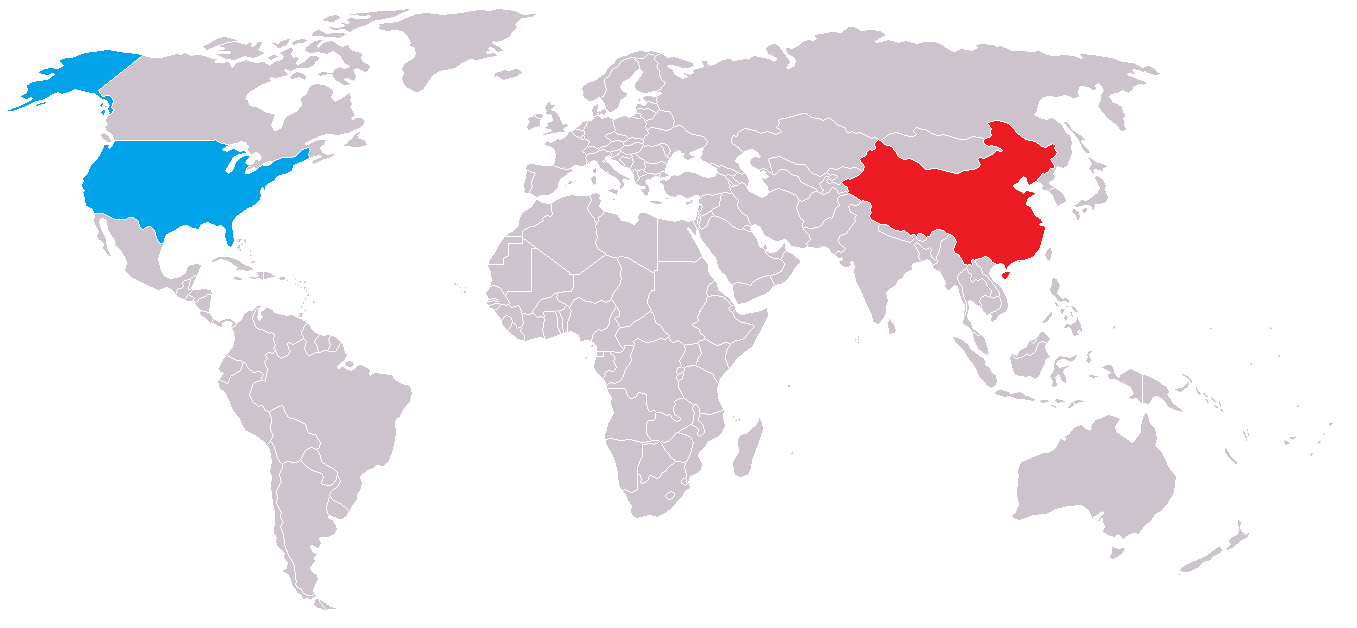
As I make the final preparations for an immanent trip to the People's Republic of China, I found by appropriate coincidence that a case has been filed which fits the theme of both my blog and my trip. One of the reasons for my travels is to get a sense of the state of intellectual property law being practiced in China (which, for my view, includes the state of defamation law). And here we have a suit being filed on behalf of China, CNN now sued for $1.3 billion - $1 per person in China.


The suit, in which the plaintiffs are a Chinese primary school teacher and a beautician, has been filed in New York (the story says the plaintiffs “filed a suit against CNN in New York” which I take to mean that the suit was filed in New York, and not simply against CNN’s New York bureau). The defamation alleged is that CNN commentator Jack Cafferty said that goods imported into the U.S. from China has included "junk with the lead paint on them and the poisoned pet food" and that the Chinese are "basically the same bunch of goons and thugs they've been for the last 50 years."


The New York plaintiffs are not alone in their outrage. The article relates that another suit has been filed in Beijing by lawyers incensed about the same remarks. The New York suit, I predict, will face a swift dismissal, because United States law rejects the concept of “group defamation.” An essential element of a defamation claim is that the defamatory comments must be "of or concerning" the plaintiff. The larger the group alleged to be defamed, the thinking goes, the less likely any particular individual will ascribe the defamatory commentary to the specific individual bringing the suit. Since the plaintiffs in this case sue on behalf of 1.3 billion people, this may well be the largest group on whose behalf such a suit has ever been brought (unless someone has, in recent history, brought a suit alleging defamation of all men or all women).


The defamatory comments alleged here, however, would seem to go more specifically against exporters of goods made in China, and the Chinese government, respectively. Thus, it would be very difficult to impute the defamation to be referring to a school teacher and a beautician who bear no responsibility in the governance of China and play no apparent role in the importation of goods therefrom.


The suit brought in China may have a different outcome, not merely because of possible home-court bias, but because the law differs from country to country. Throughout most of the world, defamation of a group is prohibited and may be remedied. It is therefore more likely than not that a remedy is available under Chinese law if Cafferty’s comments are found to be defamatory.


There has been scholarly discussion of whether group defamation should be a permissible cause of action in the United States, and commentators have suggested that the continued repetition of false accusations against a particular group, taken as a whole, can have the effect of causing non-members of the group to change their behavior towards even the most innocent member of the group (see, e.g. Racial and Ethnic Group Defamation: A Speech-Friendly Proposal by Professor Michael J. Polelle of the John Marshall Law School. This is certainly food for thought in light of historical situations in which groups such as Jews, and Muslims, Hispanics and Native Americans, and numerous other ethnic and religious denominations have been the subject of campaigns sponsored by governments and other powerful interests aimed at denigrating all members of the group.


All images used in this blog are from the Wikimedia Commons.

Thursday, April 24, 2008

Defamation before the birth of the nation.

I have been posting on very recent cases, but I felt the urge to look to history a bit, to see how far back defamation cases reach in the annals of American causes of action. Unsurprisingly, they go back all the way. Here we have Respublica v. De Longchamps, 1 U.S. 111 (Pa. Ct. of Oyer & Terminer 1784), a case decided by the Supreme Court of Pennsylvania (then styled the Pennsylvania Court of Oyer and Terminer) in 1784 - three years prior to the ratification of the United States Constitution.

The case is one of assault and battery, as well as defamation. "Charles Julian De Longchamps, commonly called the Chevalier De Longchamps," had a dispute with "his Excellency the French Minister Plenipotentiary... François Barbé-Marbois." Marbois refused to provide papers acknowledging De Longchamps' service in the French military, and De Longchamps became irate. The court below found:

  • that De Longchamps and Monsieur Marbois, having met in Market Street, near the Coffee House, entered into a long conversation, in the course of which, the latter said that he would complain to the civil authority, and the former replied, "you are a Blackguard."

1 U.S. at 111. The assault and battery, by the way, was occasioned by De Longchamps striking Marbois' cane with his own - in a manner that caused no injury to Marbois, but was one "in which the insult is more to be considered, than the actual damage." 1 U.S. at 114.

A jury convicted De Longchamps of the common-law crimes alleged, from which the appeal was taken. The Pennsylvania Supreme Court delivered a seriatim opinion in which the key issues of the allegedly defamatory content were addressed by the Chief Justice, Thomas McKean. A colorful character in American history in his own right, having earlier been a delegate from the state of Delaware to the First Continental Congress, which adopted the Declaration of Independence. For some odd reason he was permitted to simultaneously hold various offices in the state government of Delaware, while serving for over twenty years as Chief Justice of the Supreme Court of Pennsylvania. McKean's opinion asserts that "[t]his is a case of the first impression in the United States," and recites that:

  • In actions of Slander, words were formerly construed in the mildest sense they would admit; but reason has superceded such forced interpretations, and words are now to be taken according to their ordinary import and meaning. Those expressed by the defendant, are evidently of a tendency so opprobrious and violent, that they cannot fail to aggravate the outrage which has been committed.
1 U.S. at 114. McKean concludes, in a directive voiced at De Longchamps:

  • You then have been guilty of an atrocious violation of the law of nations; you have grossly insulted gentlemen, the peculiar objects of this law (gentlemen of amiable characters, and highly esteemed by the government of this State) in a most wanton and unprovoked manner: And it is now the interest as well as duty of the government, to animadvert upon your conduct with a becoming severity, -- such a severity as may tend to reform yourself, to deter others from the commission of the like crime, preserve the honor of the State, and maintain peace with our great and good Ally, and the whole world.

1 U.S. 111 at 117. Note, now, that this is a criminal case, one in which France actually sought to extradite De Longchamps to face punishment there (a remedy which the U.S. trial and appellate courts denied), and also sought to have De Longchamps imprisoned for such a period as to make amends for his wrongdoind (granted by the trial court and upheld on appeal). I blogged earlier about how some countries still have criminal libel; imprisonment of this type is a thing of the past.

A few other points worth noting. First, these were common law crimes, which are a rarity in this modern age of statutory criminal codes. Second, note that De Longchamps' insult was merely to call Marbois "a blackguard," which the court felt was exacerbated by Marbois status as a gentlemen. It generally remains a defense in the U.S. to say that the victim of a slander has so poor a reputation that the slander will do that person no harm; conversely, a person who can show their impeccable reputation prior to the slander will have an easier time showing that their reputation is susceptible to soiling in this manner.

However, the particular statement in this case would fail modern tests for slander on three distinct fronts. First, it is more readily understood as a statement of opinion than of fact (defamation must falsely assert a fact. Second, calling someone a "blackguard" really isn't much of an insult. It is akin to calling someone a lowlife or claiming that they are of bad character - far below the standards of the comment typically deemed defamatory today. Finally, Marbois was a widely know diplomat who would, in modern times, be deemed a public figure, against whom the higher standard of "actual malice" would apply in adjudging liability for defamatory comments. Of course, this standard is imported by the First Amendment, but the Constitution itself would not exist for three years after this decisions!

Under the standards of an 1784 court, then, De Longchamps was reasonably found guilty. But in a modern courtroom, Marbois would be laughed out of the chamber for raising this as a defamation.

Tuesday, April 22, 2008

A succint opinion.

Another case that has caught my eye, Randle v. Viacom, 2008 U.S. Dist. LEXIS 32092 (S.D. Tex 2008). Interesting facts, no-nonsense conclusion. For a taste of this judge's style, look no further than the opening salvo:

  • Two music promoters visited a friend in prison and posed for a photograph with him. Years later, a television program used the picture in a documentary about the friend. The promoters sued the television channel, its parent company, and an Internet vendor for defamation and misappropriation of their image. They lose.

Why read any further? You know how it ends - still, the facts are entertainingly novel. The documentary series was called "American Gangster," and the gang member being visited was Larry Hoover, of Chicago. The visit at issue occurred more than twenty years before the picture taken during that visit was used. The most serious alleged defamatory statement occurred in a commercial for the series, in which the faces of the music promoters "showed on screen for one second as the words 'they were killers, they were criminals' were spoken."

The judge concludes that the plaintiffs suffered no compensable harm to their reputations, noting that viewers "would not know who [the promoters] were after seeing their 20-year old picture; they would not know what crime they had helped Hoover commit." I think the judge is a bit too quaint in observing:

  • Reasonable viewers may conclude that the promoters are disreputable people from the picture and the explanation of Hoover's history. A viewer might infer that normal people do not visit guys in prison -- and have a snap shot taken with him. To that extent, the promoters may have lost standing in their community, but they cannot complain of a broadcast of accurate pictures of their social choices.

There are over two million Americans in prison now, and they may have parents, spouses (Hoover's visitors were accompanied by his spouse, who took the picture at issue), siblings, children, extended family members, and yes, even friends who visit them in prison. On the other hand, this statistic should hurt the plaintiffs rather then helping them, as it reduces any negative inference to be drawn from a picture of people visiting a prisoner. Indeed, another point raised in the opinion is the utterly flimsy nature of the alleged harm, supported only by "an affidavit of vague hearsay statements about why a potential partner dropped out of a deal."

At the end of the day, I think this is the correct outcome, although I also think that a reasonable viewer would understand the reference to "killers" to refer to the subjects of the series generally, and not the pair flashing in the pan in a one-second photo spot. If this was indeed the tenor of the narration, I would like to have seen a bit more analysis of this point, but the judge had the evidence in front of her, so I won't continue to second guess more than I already have.

Sunday, April 6, 2008

When celebrities defame.

Just a quick news item to throw out here. Dateline: London. Nicholas Cage has settled a defamation suit which he brought against Peggy Sue Got Married co-star Kathleen Turner, arising from some comments that Turner set down on paper in her pic-bio Send Yourself Roses. The suit was against Turner as well as her publishers. The gravamen of the complained-of comments were that Cage had been "arrested twice for drunk-driving and, I think, for stealing a dog. He'd come across a Chihuahua he liked and stuck it in his jacket."

A few thoughts on this. First, why was this suit brought in London? Possibly because the defamation laws of that country are more favorable to plaintiffs (with no pesky First Amendment to impose heightened scrutiny of public comment on public figures). Also, note that the allegations were of crimes - drunk driving and theft (even if the theft alleged would likely have been a petty one).

Publishing a falsely accusation that someone has committed a crime is libel per se, meaning that damages are presumed based on the very fact of the publication. And a criminal record is a fairly easy thing to prove or disprove. So, presuming that no such criminal record was forthcoming, having these three strikes against them (hostile local law, lack of need to prove damages, ease of proving falsity), it is easy to see why this case settled.

And on one final note of interest, under the settlement Cage gets his attorneys' fees (I would not be surprised in the least if those are substantial in a case like this, with high profile players on both sides), and the defendants will make a donation to charity.

Sunday, March 23, 2008

Deception, caught on film... defamation?

In the very recently decided case of Damon v. Moore, 2008 U.S. App. LEXIS 5905 (1st Cir. 2008), the First Circuit upheld the dismissal of a defamation claim by a double amputee from the Iraq War who was quoted in Michael Moore's documentary, Fahrenheit 9/11.

The Court framed the alleged defamation as follows:

  • Moore: While Bush was busy taking care of his base and professing his love for our troops, he proposed cutting combat soldiers' pay by 33% and assistance to their families by 60%. He opposed giving veterans a billion dollars more in health care benefits, and he supported closing veterans hospitals. He tried to double the prescription drug costs for veterans and opposed full benefits for part-time reservists. And when Staff Sargent Brett Petriken from Flint was killed in Iraq on May 26th, the Army sent his last paycheck to his family, but they docked him for the last five days of the month that he didn't work because he was dead.
  • Rep. McDermott: They say they're not gonna leave any veteran behind, but they're leaving all kinds of veterans behind.
  • * * *
  • (Video of Walter Reed Hospital)
  • Veteran: To say that we're forgotten - I know we're (in wheelchair) not forgotten. But missed? Yes. Yes, you know there's a lot of soldiers that have been missed, you know, they've been skipped over. Um, that didn't get the proper coverage that they deserve.
  • Veteran: They have the death toll but they're not showing the amount of people that have been injured and been amputated because of the injuries, you know.
  • Subtitle: (Nearly 5,000 soldiers wounded in the first 13 months of the war.)
  • Damon: Like I still feel like I have hands.
  • Voice: Yeah.
  • Damon: And the pain is like my hands are being crushed in a vice. But they do a lot to help it. And they take a lot of the edge off of it. And it makes - makes it a lot more tolerable.

Damon contended that he was not told that the interview in which he made that comment would go into Moore's film, a film which Damon (quite correctly) characterized as:

  • an attack upon the integrity of the Commander-in-Chief and the war effort, and it denounced the United States' military action in Iraq by, among other things, "attacking the credibility of the Commander in Chief of the United States Armed Forces about the justification for the war, its cost and consequences . . . ."

Damon alleged that he was defamed by his "unwitting appearance" in Moore's film because it "falsely portrays him - and has been interpreted by members of the military and veteran communities - as sharing, adopting and endorsing Moore's attack on the President and the war effort." The Court undertook two examinations of Damon's appearance, one from the point of view of the "reasonable person," the other from the point of view of the "Reasonable Military Viewer," the subset of the community from which Damon would receive the most harsh attention from a perceived agreement with the film.

With respect to the first analysis, the Court concluded that the movie in which the interview was wrapped "does not propel his otherwise benign interview into one reasonably susceptible of defamatory meaning." With respect to the second analysis, the Court logically notes that it would be unfair to let a defamer off the hook if the defamation would only be understood by a specialized community, quoting a case exhorting courts to take a closer look at members of professions which "have a standard of judgment of their colleagues which is peculiar to their profession which differs sharply from the appraisal of the uninitiated." Nevertheless, the Court concluded that no defamation followed from even that narrow font of examination:

  • Taking the documentary as a whole, no reasonable member of the military or veteran community could possibly view Damon's appearance in the documentary as being disloyal to the United States. As explained above, Damon makes no statements in opposition to the war effort, nor was his interview manipulated in such a way to imply that he was "attacking the war aims of the United States." In fact, as pointed out by the district court, the documentary's portrayal of Damon shows an individual who is discussing with great dignity and obvious pain what his participation in the conflict in Iraq has meant and not in any way suggesting that he thinks that his service was demeaned, but rather expressing his opinion that the medical treatment that he received has been something that helps to make his pain more livable and that Damon's appearance "transcends the alternative views that others present there with . . . considerable dignity and no suggestion of disloyalty."
This case is not all that unusual. There has been a trend of late for documentary filmmakers to portray unknowing interviewees in a light starkly different from what the interviewee expected. Other examples occur in Fahrenheit 9/11, for example with Raymond Plouhar, a recruiter who was later killed in Iraq, who was led to believe he was being interviewed for a politically neutral documentary on military recruitment.

Richard Dawkins, a well known proponent of atheism, wrote of his similar experience in being interviewed for a film favoring Intelligent Design. The film was titled Expelled, but Dawkins (and several colleagues) were told that they were being interviewed for a documentary called Crossroads. Asked to give an example of a scientifically plausible version of intelligent design, Dawkins hypothesized about the unlikely possibility of aliens seeding life on Earth. And in the film, this was mischaracterized as Dawkins actual belief - a far more likely candidate for a cause of action, although more clearly a false light claim than outright defamation.

However, so long as these tactics abound, it is only a matter of time before a filmmaker pushes the envelope beyond the legal limit. And then we'll have some really interesting case law to talk about.

Images posted on this blog originate from Wikimedia Commons.

Thursday, March 6, 2008

Italian Scallion

Another blast hot off the presses:

An Italian court (by which I mean a court in Italy, not one in the U.S. with an Italian judge) has sentenced a man to two-plus years in jail for posting nude pictures of an ex-girlfriend on the Internet (see Italian man jailed for emailing nude photos of ex-lover). So what brings this story to a blog on defamation? At first glance, this would seem to be a simple case of the related (but distinct) matter of invasion of privacy. However, one of the charges in the case was "aggravated defamation." Yes, that is indeed a criminal charge in Italy, one that carries the weight of the state's power to incarcerate. In fact, contrary to the free speech-leaning laws of the United States, many countries around the world prosecute defamation as a crime (and here's the bizarro kicker: particularly against public officials).

In the Italian case, the crime went beyond the mere posting of pictures. Far beyond that, the defendant "created a Web site that appeared to show his ex-girlfriend offering sexual favors and erotic games, with her phone number also on display." Okay, the phone number is not defamatory (if it's her real number), but the web site's false implication that the girlfriend was a willing participant in this, and was essentially a prostitute, clearly falls into the ballpark of defamation.

If this case had occurred in the United States (and there have been several such incidents here), jail time may not have been as likely, but a fat civil judgment would almost certainly have followed (and deservedly so). Of course, circumstances matter. For example, in 2005, a Canadian teen faced child porn charges for posting nude pictures of his ex-girlfriend (she was reportedly fifteen when the photos were taken). In 2006, A Wausau man was charged with identity theft for actions remarkably similar to the Italian case - in this case, posting photos to a faux MySpace account. The article says nude photos, but since those would almost instantly get deleted from MySpace, I'm guessing they were merely racy enough to raise hackles. And in 2007, a Macomb
man (and a local Mitt Romney campaign chair) was charged
with "unlawful posting of a message on the Internet and using a computer to commit a crime" for again carrying out that sort of activity.

Kind of makes you wonder, why are women ever willing to pose nude for pictures for guys who turn out to be the kind who will post those on the internet with a false come-hither websites?

Saturday, February 23, 2008

Scarlet Haze

Dear friends have advised me to shorten my posts and cut to the point. So, here's Kappa Sigma Fraternity v. Richard G. Miller Memorial Foundation, 2008 U.S. Dist. LEXIS 12379 (W.D. Va. Feb. 20, 2008). This is an interesting case out of my current state of abode, Virginia (although this case is from the U.S. District Court for the Western District of Virginia, and I'm residing within the Eastern District). This case brings to the fore issues of vicarious liability and internet defamation, within the framework of that great American institution, the fraternity.

The short background is that the Foundation was created by the fraternity in 1966, but with independent governance, the newly created body took a different path and eventually wound up in litigation with its former creator (much like Frankenstein's monster would have, if he had decent counsel--boy, if ever there were a wrongful birth case--but I digress). The Foundation is the defendant here, but the defamation claim is a counterclaim which the Foundation brought against the Fraternity.

The juicy part of the defamation claim is twofold.

First, the Fraternity passed a resolution noting that the governing body may "designate certain organizations as "Prohibited Memberships" for organizations for which membership in or support of is inconsistent with the principles and values of Kappa Sigma Fraternity," and further stating that "membership in or providing support to Kappa Sigma Memorial Foundation represents conduct unbecoming a Kappa Sigma."

Harsh. But defamatory? Possibly so, according to the court, which denied a motion to dismiss on the grounds that the resolution "could be interpreted by a reasonable person as at least implicitly disparaging, criticizing, or impugning the Foundation." My prediction is that once some evidence has been developed, this will not survive a motion for summary judgment - it's simply too vague and too much of an opinion to long survive as a charge that the Fraternity has made a false statement of fact.

Now to the second. The Fraternity maintains a listserve (which for some reason is named the Bologna1400), with access and use restricted to members of the Fraternity. On that listserve, some disgruntled young men made some nasty comments about the Foundation. Specifically... shucks, we don't know, the Court doesn't go so far as to report the nastiness (and I'm not going to spend 8 cents a page on PACER to download the complaint).

The Fraternity argues that:

  • [S]tatements made on the Bologna1400 listserve by "rank and file" members cannot give rise to a cause of action against the Fraternity because the Fraternity cannot be held vicariously liable for such statements. The Fraternity concedes, however, that vicarious liability would attach if the Foundation could "establish that the Fraternity authorized or ratified the alleged statements by 'rank and file' members.

Vicarious liability is not, strictly speaking, a doctrine of defamation specifically, but of tort liability in general. The Foundation characterizes those 'rank and file' members as agents of the Fraternity, noting that the Fraternity, through its aforementioned resolution, had encouraged such conduct, and that Fraternity officers also post on the listserve, including the posting of disparaging comments. The Court finds this to be enough:

  • Whether the Foundation will ultimately be able satisfy its burden of proving its allegations remains open to question, if not skepticism. Nevertheless, I find that the allegations of the Counterclaim, assuming that they are true and viewing them in the light most favorable to the Foundation, could show that the "rank and file" members who allegedly disparaged and defamed the Foundation did so as agents of the Fraternity and with actual authority, apparent authority, or subsequent ratification.

Again, I share the Court's skepticism (although it would help to exactly what alleged defamation was uttered). My prediction, again, is that the Foundation loses. In order to succeed on this claim against the Fraternity, the Foundation must show that the offending members were the equivalent of employees acting within the scope of their employment. That is, perhaps, a step too far for a Court to assess liability for a fraternity, considering that the same argument could be made against any number of tortious acts carried out by members of fraternities.* Of course, the Foundation is not without recourse, as it could sue the individual members who made the defamatory posts, but it is doubtful that those individuals have either depth of pocket to be worth pursuing. In any event it hardly seems likely that the Foundation, whatever its goals, would be interested in pursuing 'small fry' of the type that can be described as 'rank and file.'

*The author concedes that he was, in fact, an active member of Tau Epsilon Phi, back in college days which he can now barely remember. The author disclaims having committed any tortious acts during such period of active membership. If there were any, they were few and minor.

Monday, February 4, 2008

A hometown case.

Thanks to my former colleague, David M. Rogero, Esq., of Coral Gables Florida for bringing the following item from my hometown paper to my attention:

From the Miami Herald, Miami blog postings spark $25 million lawsuit

By PATRICK DANNER


  • Developer Tibor Hollo has filed a $25 million defamation lawsuit against a Miami real estate agent who blogged that the octogenarian went bankrupt in the 1980s and is headed for a fall with the upheaval in the condo market. Hollo last week sued agent Lucas Lechuga and the Coral Gables brokerage Esslinger-Wooten-Maxwell alleging they have engaged in a smear campaign against him and his Opera Tower condo development on Lechuga's Miami Condo Investments blog.
The asserted defamation? A November 25 blog post wherein the defendant stated:


  • "This developer went bankrupt in the 1980s and I think we'll see a repeat performance within the next 6 months. What do I know, though? I'm no real estate oracle."

The developer (and now plaintiff) counters that he never went bankrupt. Note that the original post does not say that the plaintiff had filed for bankruptcy, which is a legal nicety. One can go bankrupt (in the sense of having more debt than capital) and recover just fine. Since truth is a defense to defamation, this matter may await the discovery process to determine if there was any point in the 1980's where the statement holds true.

Fellow blogger Marc Randazza was quick to identify this as a SLAPP suit (the clever acronym for a "strategic lawsuit against public participation") - an effort to use litigation to intimidate or silence a critic from speaking badly about the litigant, even where the matter is protected speech about a matter of public importance. There is a question of infinite recursion there - could Hollo sue Randazza for deeming this a SLAAP suit? Almost certainly not, since the lawsuit itself is clearly a matter of public importance.

In this case (as in most cases), if the intent of the litigant was to squelch bad speech, it has badly backfired, and the assertion - true or not - has been spread much farther and wider than the defendant blogger had intended (or likely could have imagined).

This also raises the somewhat interesting issue of defamation over the Internet - I say "somewhat" because it really is not much different from defamation through any other media, except as to how quickly it spreads. There are also some immunity issues that arise with respect to internet service providers under provisions of the Digital Millennium Copyright Act ("DMCA"), but those issues are not present in this case, as the defendant is the blogger himself, and not whichever service hosts the blog.

My utterly confident prediction in this case is that the plaintiff will not win the $25 million in damages that he seeks. You can take that to the bank.

Tuesday, January 29, 2008

Recent cases on privilege, pt. 2

Here is the second of two recent cases that caught my attention considering the privilege defense in the law of defamation, Harris v. Bornhorst, 2008 U.S. App. LEXIS 724 (6th Cir. 2008). The facts underlying this case are both tragic and fascinating, among the most interesting I have seen:

On the afternoon of June 27, 1998, Lori Duniver discovered that her five-year-old daughter, Devan, was missing from her home in New Philadelphia, Ohio. The following day, Devan's body was found in a wooded area near her home. She had been stabbed seven times in the neck.

Captain Jeffrey Urban of the New Philadelphia Police Department... identified several "persons of interest" who might have killed Devan, including Devan's mother, Lori, who had recently called a suicide hotline to report that she was depressed and considering harming herself and her children; Lori's boyfriend, Jaimie Redmond, a drug addict and felon of whom Devan was afraid, who had previously kidnapped Devan for three days and beaten her with a belt, who may have been in the neighborhood of Devan's house at the time of her disappearance, who was later found in possession of an unexplained pack of children's playing cards, and whose alibi witness was later discovered to have given a false name and Social Security number to the police; Devan's father, Richard, a violent alcoholic who had recently complained about having to pay child support for Devan and who refused to help Lori search for Devan after Devan's disappearance, claiming to be too drunk to drive; Devan's brother, Dylan, who was described by several individuals as violent and who had recently stabbed a cat; and Harris, a twelve-year-old, African-American neighbor of the (Caucasian) Dunivan family.


Harris is the plaintiff in this lawsuit. Despite an apparent rogues gallery of other likely suspects, it was Harris who was brought to the police station and coerced into confessing to the murder. This confession came under the threat of severe punishment if he was found guilty without having made a confession, and was quickly recanted. More importantly, the confession was full of holes. Harris didn't know how many times Devan had been stabbed; he guessed two. He said there had been no blood, but a forensic expert testified that this was impossible, given the number and nature of the wounds. Like an episode of CSI played in reverse, the forensic evidence indicated the lack of any connection between the boy and the body, but prosecutor Linda Spies pressed ahead with the prosecution, and the court found Harris guilty on the strength of his confession alone - a result which was thrown out only after two years of juvenile confinement.

The first defamation issue arose on June 8, 2000, the day Harris was released from prison:

Spies held a press conference that day, at which she stated, "[F]rankly, in my heart and in my gut, I feel that Anthony Harris is responsible for the murder of Devan Duniver." No further charges were ever filed against Harris, and no one has since been arrested for or convicted of Devan's murder.


Following his release, Harris filed a civil suit against various parties-including Spies-in August 2003; in 2004, he applied to enlist in the Marine Corps,and disclosed that he had been convicted of murder, even thought that conviction had been overturned. When the Marines sent someone to ask Spies for documents concerning the matter, the second defamation issue arose:

When Brahen [that's our Marine] arrived in Spies's office and requested the documents, Spies reacted by saying, in a hostile tone of voice, "[A]re you fucking kidding me?" She asked Brahen to accompany her to a conference room, where she "proceeded to tell [him] a little bit about the case and what happened." She asked Brahen whether "the Marine Corps would actually take Anthony Harris into the Marines." Brahen became uncomfortable and asked Spies to speak with Baker on the telephone. Spies agreed and proceeded to inform Baker that Harris would always be a suspect in the murder of Devan Duniver because there were no other suspects.


This comment disrupted Harris' efforts to enlist (later news reports indicate that Harris was eventually able to join the Marines, and is now serving in Iraq), and was frankly an unadvisable step for Spies, already the target of a defamation suit by Harris.

Back to the civil suit, Spies sought both absolute and qualified immunity for her alleged role in the decision to arrest Harris (and her subsequent comments on the arrest, and to the Marines) and the district court held that she could get qualified immunity. The difference between qualified and absolute immunity in this case comes with the scope of the job - the prosecutor gets absolute immunity from the things she says while trying the case, even if she is flat-out maliciously lying; but she only gets qualified immunity for acts of an administrative or investigative manner. Spies wasn't trying the case when she held the press conference (she had already lost), and she certainly wasn't trying the case when she told the Marines that Harris would always be a suspect, and claimed there were no others. In fact, Spies position as a prosecutor worked against her in this case:

Under the circumstances in which it was made, Spies's statement at the press conference was a mixed statement of opinion sufficient to give rise to a defamation claim. Spies made the statement during the workday, in a public venue, during an appearance at which she was accompanied by her second-in-command in the county prosecutor's office. All of these elements combined to imply that her statement was based upon facts not known to the general public.


So, being the prosecutor in this case not only failed to protect Spies from liability, but created an appearance of special knowledge which bolstered the potential of the statement to defamate. A similar issue arises with the statement to the Marines:

The district court also erred in concluding that Spies's statements to the recruiters were true and thus could not constitute defamation. Spies's statement that Harris would always be a suspect because there are no other suspects is directly contradicted by Urban's deposition testimony.


Many of the news reports of the case seem to have glossed over what I thought was the single most damning thing the prosecutor was alleged to have said: that there were no other suspects. The facts reported by the court indicate that this was blatantly false, and surely cast Harris in a light much harsher than the facts allowed. The press conference statement may have been a bit of understandable puffery; but the latter half of the statement to the Marines does appear to have been an outright falsehood. If the court's recitation of the facts is correct, then the prosecutor in this case bit off quite a bit more than she could chew, and would have been wise to recuse herself from further dealings resulting from this case the minute the initial conviction was overturned - but especially in light of pending litigation.

But what separates this case from Western American Transportation, which I wrote about in my last blog, and in which the plaintiff's lawyer did receive qualified immunity? Probable cause. In Harris, the appellate court found the district court in error, because there was no probable cause for Spies to order the arrest of Harris in the first place. There was never enough suspicion for Harris to be questioned, and the confession was meaningless in light of the circumstances. A thoughtful prosecutor simply should have known better.

This case may turn out to have more than local importance. The ruling has been used as fodder in a local judicial campaign, and in a well-deserved self-congratulatory note to the lawyers from Baker Hostetler representing Harris. It certainly bespeaks caution with respect to the conduct of prosecutors outside the courtroom, and particularly in press conferences following acquittals.

Saturday, January 26, 2008

Recent cases on privilege, pt 1.

Here are a pair of recent cases decided within the past few weeks that raise the interesting impact of privilege in the law of defamation:

Western American Transportation LLC v. Morrow, 2008 U.S. App. LEXIS 1215 (5th Cir. 2008), and Harris v. Bornhorst, 2008 U.S. App. LEXIS 724 (6th Cir. 2008). Now, these are both federal cases - the first was apparently brought under diversity jurisdiction, while the second raises a slew of federal issues that are beyond the scope of this blog. Today I am just going to address Western American Transportation LLC v. Morrow, and I will post a comparative entry on Harris v. Bornhorst (which has, I think, a much more interesting set of facts) later in the week.

In Western American Transportation, the plaintiff filed a lawsuit alleging that the defendants "had violated the parties' agreement by diverting business and accounts receivable away from Western American." and specifically that the defendants had "wrongfully withheld funds that should have gone to Western American, thereby committing theft and conversion." The defendants filed a counterclaim that this allegation was defamatory.

As the court points out later on the opinion, accusing someone of a crime is (at least in some states) "defamatory per se". That is to say, in jurisdictions which apply that rule, all the complainant has to do is show that the statement was made, and was false, and the court will presume that an injury has occured. per se defamation will be covered extensively in a future blog (it is a fun area by itself, with plenty of twists and turns), but for the purposes of this discussion, it is enough to say that it simplifies things - indeed, the court notes that "[t]he parties agree that Western American's theft-and-conversion allegations were defamatory per se and are accorded a presumption of malice."

So, here we have a case where it is agreed that the statement was made (obviously - it was in a filing with the court!), and as it happens, a partial settlement by the parties wherein the plaintiff even agrees that the claims were not true! It seems like this would be a slam-dunk for a finding that defamation has indeed occured, but wait - there's a catch, and the catch is called "privilege":

However, even when a plaintiff makes a prima facie showing of the essential elements of defamation, recovery may be precluded if the defendant shows that the statement was protected by a privilege, absolute or qualified. In Louisiana, a defamatory statement by an attorney in a judicial proceeding is protected by a qualified privilege, but the statement must be material and must be made with probable cause and without malice.

So, was the statement here material? Definitely, says the court - it was the basis of the original cause of action filed, the "core issue in that suit". Did the plaintiffs have probable cause? The court finds that they did, which is unsurprising given the very low level of suspicion needed to show probable cause. Readers may be familiar with probable cause as a criminal law concept, but as this case demonstrates, there is room for it to pop up in tort as well (another area of tort where it arises on occasion is in false imprisonment cases, where a store owner has detained a suspected shoplifter).

As for the "without malice" element, the court finds that the plaintiffs believed that the allegations were true when the complaint was filed, and that is enough to meet this requirement. Counterclaimants argue that a statement which is defamatory per se should be presumed inherently malicious. The court concedes that this presumption exists, but notes that "a presumption of malice may be rebutted by the defendant." Although the court does not spell out the test for such a rebuttal to occur, since the burden of proof in simple torts is preponderance of the evidence, plaintiffs would have needed to do no more than provide evidence showing it more likely than not that they believed the truth of the allegations. And that is exactly what they did.

So, the upshot of this case seems to be this: if a) you have some reasonable basis to suspect something bad about another person, and b) you honestly believe this bad thing to be true, and c) this bad thing is material to some cause of action you have against this person, then d) you can say things in the context of allegations supporting a legal pleading that would otherwise run you afoul of the law and expose you to liability for defamation. This may for a moment seem to give rise to the thought "aha, I can get away with defaming [insert disliked person] if I sue them!" But considering the cost of intiating litigation (and the fact that you have to be suing them for something), it's hardly worth the effort. In any event, the rule certainly makes sense in light of the number of lawsuits in which one party's allegations can be read as accusing the other party of acts amounting to a crime. If every such action was subject to a counterclaim based on an allegation of defamation, those defamation claims would be brought almost as a matter of course, as a way for the defendant to further declare their innocence of the claim. That, in turn, would muddle up litigation and burden court calendars at an entirely new level.

Two other notes of interest on this case. First, a disclaimer: remember, this is a case under Louisiana law. There is no federal law of defamation, and this outcome says nothing about what might be returned by courts in other states. Second, an interesting quirk in the procedural posture of the case. This appeal arises not out of the ongoing dispute between plaintiff and defendant (that seems to have been largely settled along the way), but between plaintiff's insurance company and defendant. Plaintiff's insurer did not want to cover plaintiff for the costs of defending the defamation suit. The case implies that the insurer was unhappy with the terms of plaintiff's settlement, and it is logical to suspect that the insurer was none too pleased that plaintiff effectively admitted to the defamatory conduct. However, the court's affirmation of the finding of privilege moots that dispute, as there no longer remains any defamation claim, which lets the insurer off the hook. Thus the court does not reach another interesting issue, whether the insurer must cover the costs of defending the defamation claim.

Monday, January 21, 2008

Slander and Libel: the Blog

Hello! My name is Brian Dean Abramson, and this is my blog. It is called "Slander and Libel" for a good reason - because it is primarily about the area of law more broadly known as "defamation," which includes slander and libel. You may ask, why not just call this blog "Defamation"? Well, I think "Slander and Libel" just has a nicer ring to it.

Now for a quick background. First, about me: I am an LLM candidate at The George Washington University Law School. I received my J.D. from the Florida International University College of Law in 2005, then practiced for about a year and a half with a Coral Gables intellectual property firm headed by one of the nation's top IP lawyers, Leslie J. Lott. When I later struck out on my own, I did contract work for another area attorney, which gave me some fairly substantial exposure to defamation, false light, and right of publicity causes of action.

Now, about the law of defamation. The law (at least as it applies in the United States) can basically be summed up as follows: if person A says or writes something about person B which is false, and person B is injured thereby, then person B can recover for his injury (and perhaps some extra damages to punish person A and dissuade others from acting like that). However, that is a vast oversimplification of the many issues which may arise in this cause of action. Suppose person A doesn't identify person B by name, but describes person B by characteristics? Suppose person A writes a book purporting to be fiction, but one of the characters is asserted to be a thinly veiled caricature of person B? And suppose person A expresses a nasty opinion of person B, but doesn't come right out and claim a false fact? All of these are issues upon which defamation cases may hinge, and many more are waiting in the wings.

Furthermore, in the United States, there is another set of considerations arising from the First Amendment guarantee of freedom of speech. At its core, this guarantee protects the right of citizens to engage in political speech, including the criticism of public officials. Thus, the Supreme Court has found that the First Amendment presents a higher bar for such an official to claim that he or she has been defamed. This bar has also been imposed, in sometimes unpredictable ways, towards persons who are not public officials, but who have entered the light of public interest due to circumstances beyond their control.

I intend to post two to three discussions per month detailing the state of defamation law, quirks thereof, and new developments thereto. Comments, questions, and suggestions welcome.

Warm regards,
Brian Dean Abramson, Esq.